
Hormuz Tensions Flare: Iran Closes Strait, Houthis Open Red Sea Front; Global Energy Crisis Looms
Iran is intensifying pressure on the U.S. by closing the Strait of Hormuz, while the Houthi group in Yemen has expanded its blockade to the Red Sea and claimed attacks on Saudi targets. These developments raise concerns that the Middle East crisis could disrupt global energy and trade routes.
Iran Insists on Keeping Strait of Hormuz Closed
The Islamic Revolutionary Guard Corps (IRGC) has confirmed that the Strait of Hormuz will remain closed until the U.S. meets Tehran’s demands, which include lifting sanctions, releasing frozen assets, and paying war reparations.
Iran’s Tasnim News Agency reported that Iran’s Supreme National Security Council has set conditions for reopening the Strait of Hormuz, outlining six key demands:
- An end to the war on all fronts
- Lifting the blockade on Iranian ports
- Lifting U.S. sanctions
- Releasing frozen Iranian assets
- Paying war reparations
- Establishing a $300 billion reconstruction fund for Iran
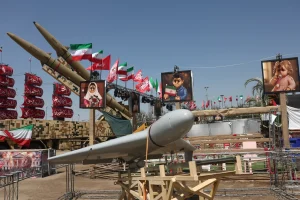
These demands indicate that the Strait of Hormuz could become a crucial bargaining chip for Iran—spanning political, security, and economic spheres—to pressure the U.S. into altering its policy toward Tehran. Hormuz Crisis Shakes Global Energy Markets
The Strait of Hormuz is a vital route for transporting oil and gas from the Middle East to global markets; consequently, any blockade of this route raises concerns for energy markets and international trade.
If the situation drags on, it could drive up oil prices, shipping rates, logistics costs, and inflation, while shipping companies might be forced to reroute vessels to avoid high-risk zones.
Houthis Expand Front to the Red Sea
While Iran blocks the Strait of Hormuz, Yemen’s Houthi group has announced a naval blockade targeting Saudi ports in the Red Sea, claiming to have struck Saudi oil facilities with missiles and drones.
Yahya Saree, the Houthi military spokesman, stated that the attacks targeted Saudi military personnel and equipment, while Saudi authorities reported that the resulting fires had been brought under control.
Meanwhile, medical sources in the city of Mocha reported an attack near the port that caused casualties; however, figures and details regarding the incident vary depending on the source.
Saudi Arabia Partners with Allies to Manage Risks
Amid escalating tensions, Saudi Arabia has signed mutual defense agreements with Turkey and Pakistan. These pacts operate on a principle similar to NATO, where an attack on one member nation is considered an attack on all.
Turkish Foreign Minister Hakan Fidan expressed hope that Egypt would join the agreement, emphasizing that the cooperation aims to strengthen collective deterrence. …and is not specifically targeting any single country.
**Keep a Close Watch on the Strait of Hormuz and the Red Sea: Impacts on the Global Economy**
Iran’s potential closure of the Strait of Hormuz, combined with the Houthi blockade in the Red Sea, is placing pressure on critical global shipping lanes and energy routes.
If the conflict drags on, it could affect oil prices, shipping rates, logistics costs, supply chains, and inflation, while security risks in the Middle East remain a key factor for global markets to monitor.
source :
www.vietnam.vn
VSSL: Viet Star Shipping Line
📞 +84 862 904 666
📩 info@vssl.com.vn
🏘️27-29 Ngo Thi Bi Street, Tan Hung Ward, Hochiminh City