
Vietnam’s Red River Delta is emerging as a major logistics growth hub, supported by expanding industrial activity, abundant cargo volumes, and its strategic position in Northern Vietnam. However, fragmented infrastructure, high transportation costs, and administrative barriers continue to constrain the region’s potential. Removing these bottlenecks through policy reform, multimodal connectivity, and green logistics development will be essential to strengthening regional competitiveness.
Red River Delta Logistics: A Strategic Opportunity for Northern Vietnam
The Red River Delta is approaching a critical stage in its development as a major logistics hub in Vietnam. With its growing industrial base, expanding manufacturing networks, and strong demand for freight transportation, the region has favorable conditions to strengthen its role in domestic and international supply chains.

Speaking at the discussion session “Enabling Institutions – Unlocking the Flow” during the 7th Regional Logistics Forum 2026, Nguyen Duy Minh, Vice Chairman of the Vietnam Logistics Business Association (VLA), emphasized that the region possesses the necessary conditions to develop into a large-scale logistics center.
Strategic planning is expected to provide an important foundation for this transformation. The Red River Delta Regional Plan toward 2050 aims to expand logistics development in connection with international trade. Meanwhile, Vietnam’s Logistics Services Development Strategy for 2025–2035, with a vision toward 2050, approved under Decision No. 2229/QD-TTg dated October 9, 2025, provides further direction for the industry.
Despite these favorable conditions, realizing the region’s logistics potential will require coordinated action to address infrastructure gaps, administrative complexity, and weaknesses in regional cooperation.
Three Major Barriers Holding Back Red River Delta Logistics
Nguyen Anh Son, Director General of the Import-Export Department under Vietnam’s Ministry of Industry and Trade, described logistics as the “circulatory system” of the economy, connecting suppliers of goods and raw materials with manufacturing facilities before delivering finished products to domestic and international markets.
However, according to Le Quang Hoa, Vice Chairman of the Hung Yen Provincial People’s Committee, three major barriers are preventing the Red River Delta from fully capitalizing on its logistics advantages.
- Weak Regional Coordination
Although regional planning frameworks and national logistics development strategies have been established, implementation across provinces remains insufficiently coordinated.
Without effective cooperation, individual localities may develop infrastructure and logistics facilities independently, creating fragmented transport networks and reducing the efficiency of regional cargo flows.
A stronger coordination mechanism is needed to align investment priorities, connect logistics hubs, and ensure that infrastructure projects support a shared regional development strategy.
- Fragmented Infrastructure and High Transportation Costs
Road transportation continues to dominate freight movement, contributing to high logistics costs and increasing pressure on transport infrastructure.
Meanwhile, the potential of inland waterway transportation, particularly along the Red River, remains underutilized. Airports, seaports, inland container depots (ICDs), and other logistics facilities are also not always developed as part of an integrated network.
This fragmented approach can create overlapping investments, inefficient cargo transfers, and disruptions across transportation routes.
Developing an integrated multimodal logistics network will therefore be essential to improving freight efficiency and reducing overall supply chain costs.
- Similar Economic Development Models Across Provinces
Another challenge is the tendency for provinces in the region to attract investment into similar industrial sectors.
Rather than developing complementary roles within regional value chains, localities may compete for similar projects and investment resources. This can limit specialization and reduce opportunities for cooperation.
A more coordinated approach should assign clear economic and logistics functions to individual localities, allowing manufacturing centers, distribution hubs, transport corridors, and seaports to reinforce one another.
Administrative Complexity Creates Additional Barriers for Investors
Beyond infrastructure and regional planning, fragmented public administration is another obstacle to logistics development.
According to Le Quang Hoa, establishing a logistics center can require businesses to work with at least three separate departments: the Department of Construction for planning-related assessments, the Department of Finance for project or capital management, and the Department of Industry and Trade for cargo-related activities.
This division of responsibilities can create complicated administrative procedures, increase project preparation time, and discourage investment.
A more streamlined governance structure could help simplify approval processes, clarify responsibilities, and improve coordination between public authorities.
For investors considering logistics centers, bonded warehouses, ICDs, or multimodal transport facilities, greater administrative transparency would make project implementation more predictable and efficient.
Inland Waterway Transport: An Underused Opportunity for Logistics Cost Reduction
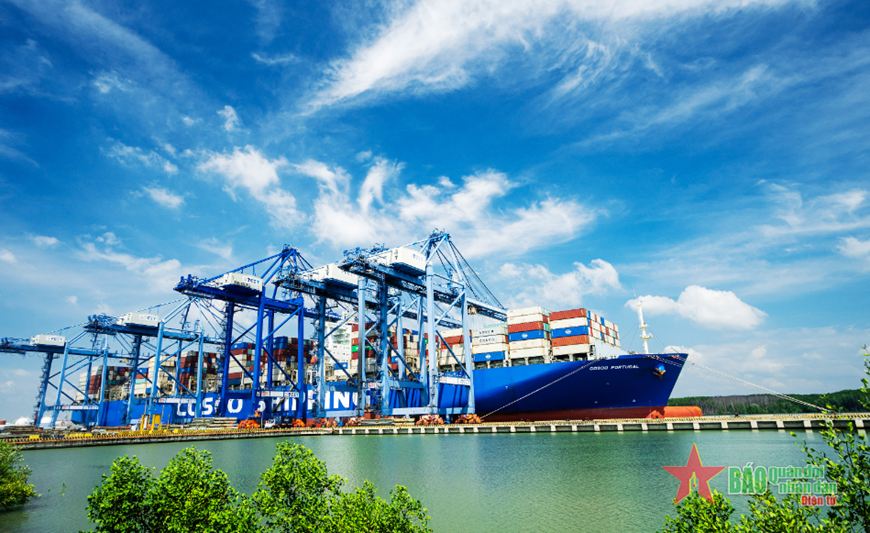
Inland waterway transport is widely viewed as an important alternative to road freight, particularly for containerized cargo moving between industrial areas, inland logistics hubs, and seaports.
However, the current share of container transportation by waterway in Northern Vietnam remains limited.
Cap Trong Cuong, General Director of Macstar Group, said the company had proactively launched inland waterway and coastal shipping services in 2024, including routes connecting Hai Phong with Ninh Binh, Nam Dinh, Vung Ang, and Chu Lai.
Despite these efforts, container transportation by waterway in Northern Vietnam accounts for only around 2–2.3%, according to the figures cited at the forum.
This low share highlights five major bottlenecks.
- Unstable Waterway Infrastructure
Navigation conditions are affected by seasonal low water levels, flooding, tides, and shallow sections of waterways.
These constraints can limit the operation of larger container vessels and reduce the feasibility of carrying containers in multiple tiers.
Improving navigable channels, addressing shallow areas, and ensuring sufficient bridge clearance would help increase transport capacity and operational reliability.
- Limited Connectivity at Both Ends of Transport Routes
At seaports, inland waterway vessels may face delays while waiting for berths or cargo-handling schedules.
At the other end of the supply chain, many industrial parks lack convenient cargo collection and delivery points, depots, or ICDs connected to inland waterways.
Without efficient first-mile and last-mile connections, waterway transport cannot deliver its full cost advantage.
- Total Logistics Costs Remain Uncompetitive
Although the main waterway freight leg can be cheaper than road transportation, additional expenses may offset the savings.
These include cargo handling, transshipment, first-mile and last-mile trucking, berth waiting time, and the risk of schedule disruptions.
The relevant measure is therefore not simply the freight rate for one transport segment, but the total cost of moving goods from origin to destination.
Improving end-to-end coordination will be essential to making inland waterway transport a commercially attractive option.
- Imbalanced Cargo Flows and Container Availability
Some routes experience imbalances between outbound and inbound cargo volumes. Others face shortages of suitable empty containers.
These problems reduce vessel utilization, increase repositioning costs, and make regular service schedules more difficult to maintain.
Better cargo matching, shared logistics data, and stronger coordination between shippers, carriers, and port operators could help improve capacity utilization.
- Administrative Procedures and Fragmented Data
Businesses also face difficulties caused by administrative procedures and the lack of shared data systems.
Without reliable information on cargo demand, vessel schedules, port capacity, and container availability, operators have limited ability to coordinate transport resources efficiently.
A common logistics data platform could improve planning, reduce waiting times, and support more predictable cargo movements.
Institutional Reform: Building an Integrated Logistics Ecosystem
Addressing these bottlenecks requires coordinated reforms in governance, infrastructure investment, digitalization, and environmental performance.
Streamlining the Legal Framework and Regulatory Responsibilities
According to Nguyen Anh Son, under Decree No. 351/2026/ND-CP dated September 11, 2026, the Ministry of Industry and Trade has been assigned state management responsibilities for logistics services.
The ministry is also reviewing the existing legal framework, including Decree No. 163/2017/ND-CP, with the aim of developing a more comprehensive regulatory framework for the sector. A circular establishing criteria for classifying and grading logistics centers is also planned.
Le Quang Hoa has called for logistics-related state management to be consolidated under a single coordinating authority, similar to the management model used for industrial parks. Such a mechanism could reduce overlapping procedures and improve the consistency of investment decisions.
Meanwhile, Hoang Hong Giang, Deputy Director General of the Vietnam Maritime and Inland Waterways Administration under the Ministry of Construction, said the draft revised Vietnam Maritime and Inland Waterway Code was expected to be submitted to the National Assembly in October 2026.
The proposed legislation would consolidate the Maritime Code and the Law on Inland Waterway Navigation. Its six major policy areas include expanding the scope of management from rivers to the sea, streamlining administrative structures, encouraging private investment in infrastructure, promoting digital transformation and emissions management, and shifting toward ex-post supervision and risk-based management.
These reforms are intended to strengthen the institutional foundation for more efficient maritime and inland waterway transportation.
Unlocking Inland Waterway Transport Through Targeted Investment
From a business perspective, Macstar Group’s Cap Trong Cuong has proposed a coordinated package of measures to make inland waterway transport a more reliable component of regional logistics.
First, the government should consider more attractive fees and charges to encourage regular inland container shipping services connecting seaports with ICDs and industrial parks.
Second, major seaports should allocate dedicated berths for inland waterway vessels to reduce waiting times and improve cargo-handling efficiency.
Third, investment should prioritize critical navigation bottlenecks across entire transport corridors rather than addressing isolated sections. This includes improving channel conditions and bridge clearance along key routes.
Greater attention should also be given to unlocking the potential of the Red River waterway system.
These measures could help reduce dependence on road freight, improve transport capacity, and support a more balanced distribution of cargo across different modes.
Green and Smart Logistics: A New Direction for Regional Competitiveness
Alongside institutional and infrastructure reform, digital transformation and green logistics will play an increasingly important role in the development of the Red River Delta.
Nguyen Anh Son has encouraged businesses to optimize internal operations and outsource activities outside their core areas of expertise to professional logistics providers.
This approach can help companies focus on their main business activities while benefiting from specialized transportation, warehousing, customs, and supply chain management services.
Digital technologies can also improve shipment visibility, cargo planning, vehicle utilization, and coordination between logistics stakeholders.
At the same time, expanding inland waterway transport and improving multimodal connectivity can create opportunities to reduce road congestion and improve the efficiency of freight movement. The environmental benefits will depend on factors such as vessel utilization, fuel efficiency, cargo volumes, and the effectiveness of first-mile and last-mile connections.
For businesses operating in increasingly competitive international markets, green and smart logistics can support both cost optimization and more sustainable supply chain management.
Strengthening the Role of Industry Associations
Industry associations such as VLA also have an important role to play in connecting businesses with policymakers.
Associations can collect operational feedback from logistics providers, identify regulatory obstacles, and communicate practical recommendations to relevant ministries and government agencies.
They can also contribute to policy consultation to ensure that new regulations reflect actual business conditions and produce measurable improvements in industry performance.
Stronger cooperation between government agencies, provincial authorities, logistics providers, manufacturers, and industry associations will be essential to translating national strategies into effective regional implementation.
Red River Delta Logistics: Turning Regional Potential into Sustainable Growth
Unlocking the logistics potential of the Red River Delta is not simply a matter for individual provinces or companies. It is a regional development challenge that requires coordinated planning, integrated infrastructure, and consistent policy implementation.
The region already benefits from a strong industrial base, substantial cargo demand, and strategic access to domestic and international markets. However, these advantages will only translate into stronger competitiveness if infrastructure bottlenecks are removed, administrative procedures are simplified, and transport networks are developed as an integrated system.
By strengthening inland waterway transport, improving multimodal connectivity, promoting digital transformation, and advancing green logistics, the Red River Delta can build a more efficient and resilient supply chain network.
Ultimately, the success of this transformation will depend on the ability of regional stakeholders to move beyond fragmented investments and create a coordinated logistics ecosystem that reduces costs, improves reliability, and supports sustainable economic growth across Northern Vietnam.
Source:
https://www.qdnd.vn
https://vneconomy.vn
Viet Star Shipping Line
📞 +84 862 904 666
📩 info@vssl.com.vn
🌍 www.vssl.com.vn
🏘️27-29 Ngo Thi Bi Street, Tan Hung Ward, Hochiminh City